First published on sydera.io · Shared on LinkedIn — join the conversation

The HSE handbook never has a bad day. Do the routines work when the manager does?
“Low threshold” is still a threshold. How to move the advice in ISO 45010:2026 from guidance into routines that hold up on an ordinary working day — without making employees' health data the evidence.
By Nicolai Slinning ·
“We have a low threshold for talking to your immediate manager.”
That is fine. Until your immediate manager is on holiday, in the middle of a delivery, or simply not the person you want to discuss your body with.
Take that sentence out of the HSE handbook. What does it actually make happen?
Who can do what? What is already available? And what happens if the answer turns out to be “we'll look into it”?
I have spent a few weeks letting a small robot examine questions like these on LinkedIn. The robot comes from our game, “Mission: human”, and tries to understand how we have organised the workplace. It means well.
Fortunately, so do most managers. Even so, it is striking how much we leave to the right person being in the right place in the right mood.
This is where I think we have to start: in the organisation's source code. What we have actually decided, written down, and given someone responsibility for carrying out.
ISO 45010:2026 was published on 7 September. It provides guidance on menstruation and menopause in the workplace, and on how this can be built into the organisation's existing OHS work. Women's occupational health therefore gets a concrete place in governance, with a clearly bounded topic. The standard does not cover the whole field of women's health; it deals specifically with menstruation and menopause from an occupational-health perspective. [1]
The interest in better support is well founded. Alongside the launch, ISO points to a survey of 6,494 women across seven countries in which seven out of ten want a clear process and approach from their employer. That says something about expectations of the workplace. [2]
The guidance now exists. The most important job is making it work where you are.
A guide can build knowledge and open conversations. Its lasting value stays limited if the advice never finds its way into the management system.
Someone has to decide what will be done, and make sure it still happens once the enthusiasm after the launch has settled.
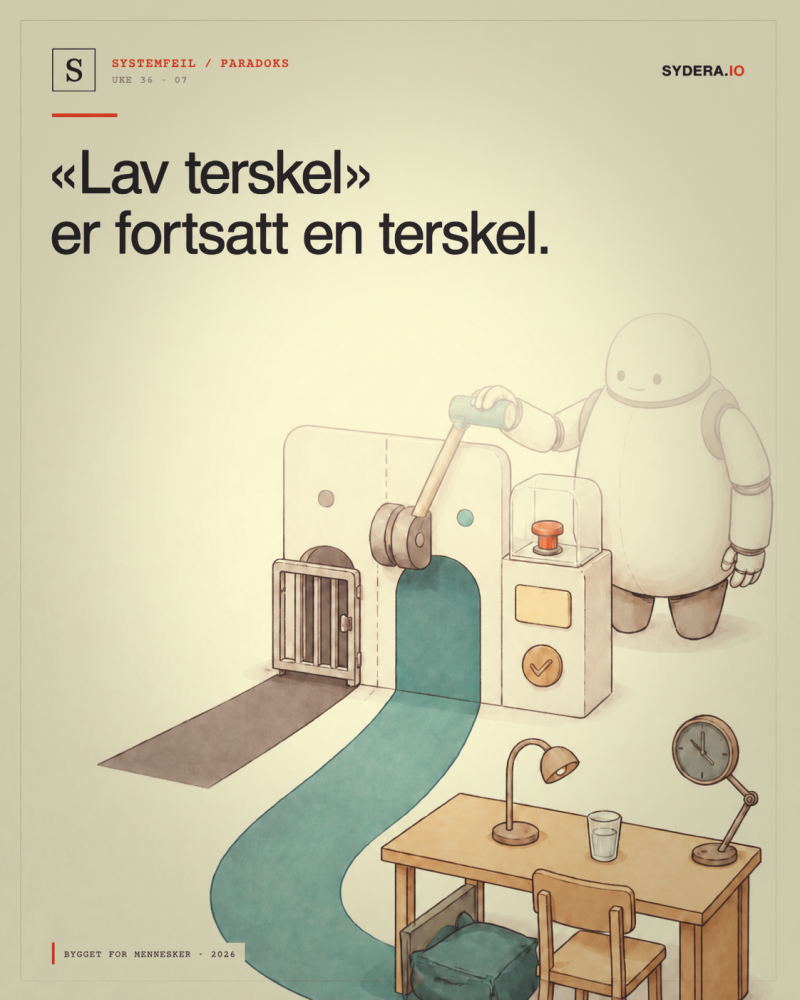
“Low threshold” is still a threshold
“Just say something”, we tell people. In doing so, we have also decided who has to take the first step. Some needs are so predictable that the arrangement should be available so the employee is spared the burden of speaking up.
That also leaves room for an important nuance: individual follow-up should still exist. But it does not have to be the entry ticket to everything. Least of all for needs that are predictable and always present in the workforce.
A policy states what the organisation has decided and committed to. An OHS routine describes how it is carried out. The policy gives direction and limits; the routine has to make them usable on an ordinary working day.
“We will accommodate employees in different life stages” can be a good decision. But a new manager on their first evening shift needs a little more to work with.
“Take breaks.” It helps only so much to have decided that employees may take a break if nobody has decided who takes over the task. Then the option exists on paper only, and staffing decides the rest.
One possible starting point for a routine: the shift lead arranges cover before the shift begins. Employees are told how to use the arrangement without stating a private health reason. If the cover does not materialise, it is reported as a failure of the arrangement to a named role. The organisation sets a deadline for follow-up and a date for examining whether the solution works.
This is an example that has to be adapted to the work and the risk. A reception desk and a production line need different solutions. But both need an answer more usable than “talk to someone”.
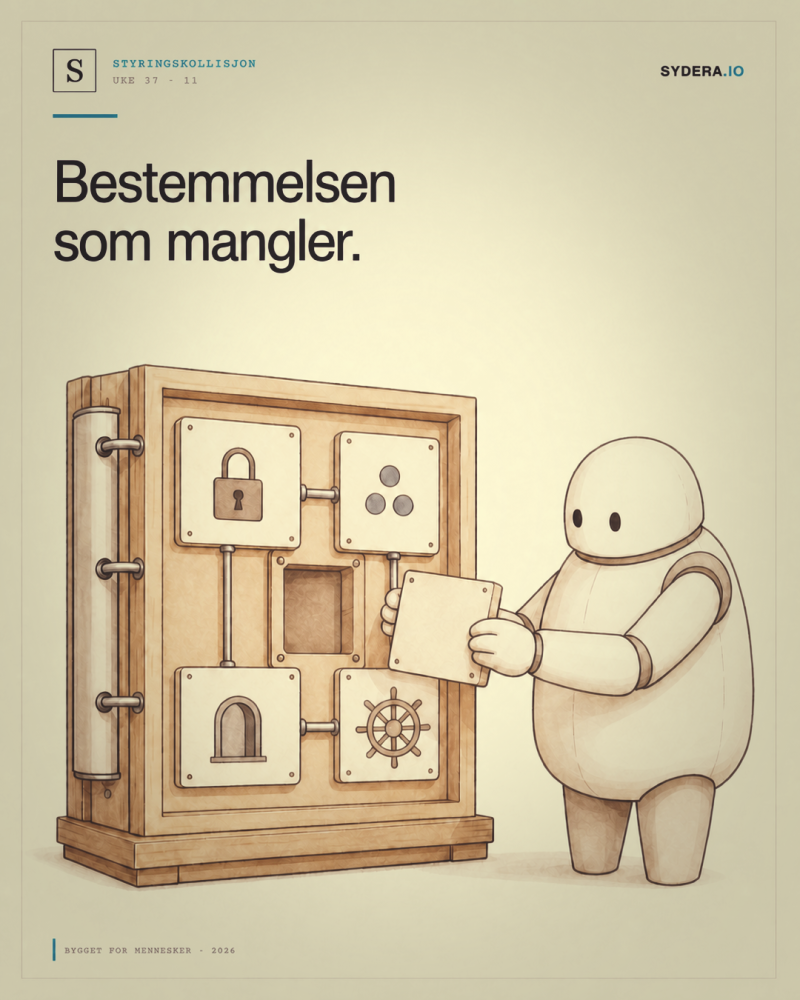
Documentable is not the same as workable
There is a decisive difference between a routine that can be documented and one that can actually be carried out.
The first has clear decisions and a trail we can check. The second also has time and resources behind it. It has to be tried out with the people who will use it.
A document review can show where the text stops. It cannot confirm that the cover turned up on Tuesday.
That is why the work has to go all the way round: PLAN–DO–CHECK–ACT. Plan an arrangement that fits the workplace, together with employees and safety representatives. Set aside what it needs and carry it out. Examine whether people actually get access. Correct what fails, and update the routine once you have learned something.
This is the way of working we want to use to make the guidance operational. ISO 45010 offers advice that can be built into the OHS system; it is a guidance standard, not a certification requirement of its own. [1]
Then comes the question that quickly makes a good initiative unnecessarily private: what should we measure?
We need to know whether the arrangement is available, whether it is used, and where it breaks down. We do not automatically need to know who has period pain or sleeps badly because of menopause.
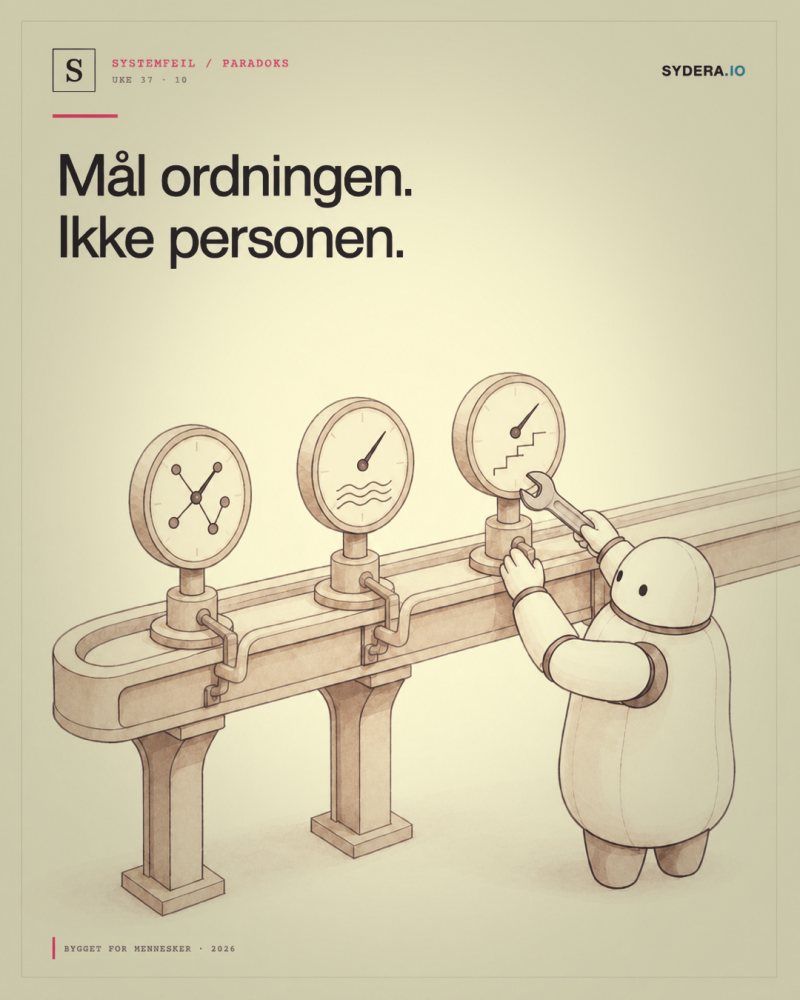
Measure the system — not the person.
It can start quite simply. Are the resources available throughout working hours? How long does a reported shortcoming stay unresolved? Does the employee have to pass several approvals to use something the organisation has already decided should be available?
This produces data management can act on. At the same time we have to be honest about what it shows. That a resource has been used does not prove better health or lower sickness absence. And small groups or detailed logs can make people recognisable even when names are removed. So the data boundary has to be settled before collection begins. [3]
We start with the governance
This is what we work on at Sydera: making the organisation's work on employee health safer and more data-driven, with arrangements that can be checked and documented without employees' private health data having to be the evidence.
What has the organisation decided? What does that mean for the person who needs the arrangement, and who follows up that it works?
The HSE Scan is a first step in that work.
Our focus is the human side of OHS: how work is organised, and which arrangements make it possible to keep going. Menstruation and menopause make the need visible. The same logic is relevant for recovery, ergonomics and predictability for employees with caring responsibilities. Technical risk assessment of chemicals falls outside our document review; that needs the relevant specialist expertise.
Good managers are still worth their weight in gold. We want to give them something to lean on, so that access to a decided arrangement holds through handovers and busy periods too. A manager should not have to invent the company's practice every time a predictable need appears.
That is why we have made “The body keeps up”, our illustrated and practical guide with reference to ISO 45010.
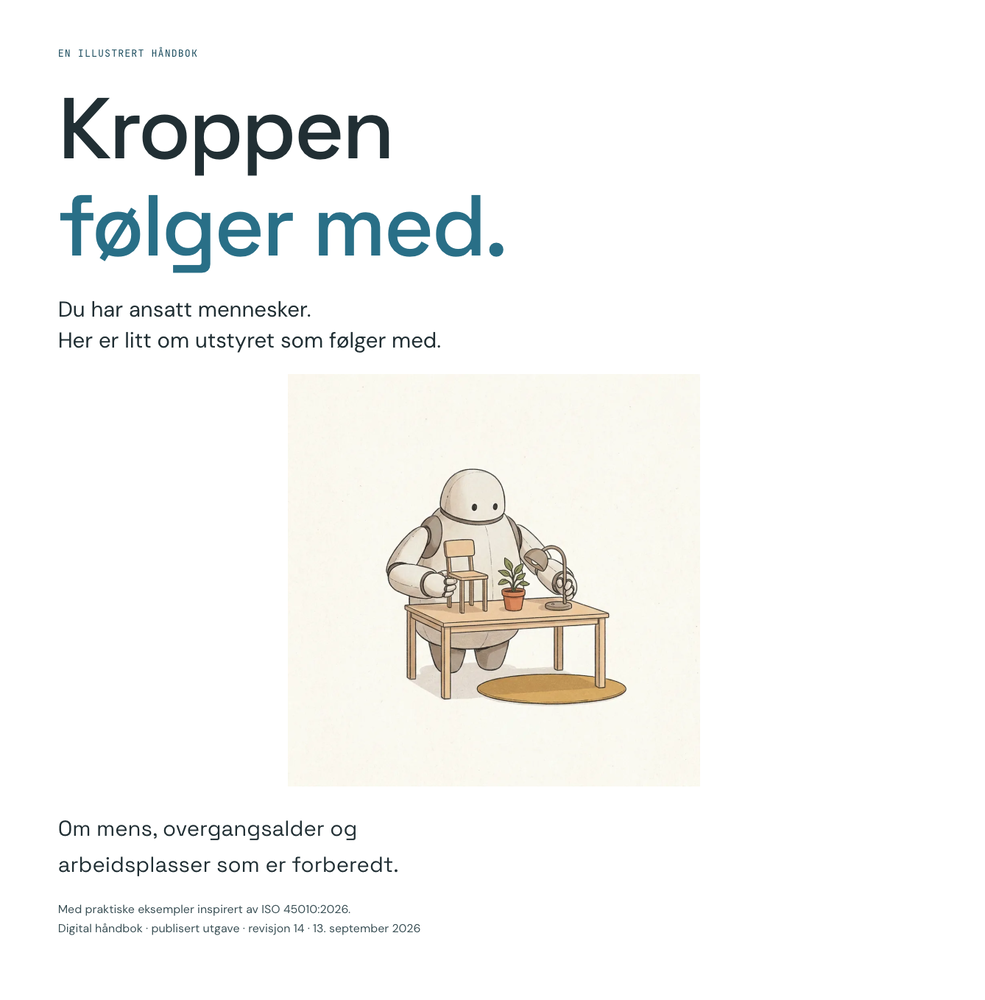
It is open on the web and contains work situations and tools you can use in your OHS work. If you want to go straight to the practical walkthrough, you can read it page by page, step by step with the robot. It is Sydera's own guide, not a publication or endorsement from ISO. [4]
My recommendation is to use it alongside a review of what you have already written. Pick one arrangement in the guide and find the routine that is supposed to make it work where you are. That makes the HSE Scan a practical way to start making the guide operational.
If you want to try, we invite you to send in one OHS routine, the HSE handbook, or another governance document. The check is entirely free. The document must contain no personal data — including in examples and appendices.
You get concrete feedback on up to three findings and one suggested rewrite of a routine or policy. The suggestion gives you something to assess and adapt together with the people who know the workplace. The review covers the document; it does not confirm practice or legal compliance. [5]
Start with one arrangement you want to make work
Perhaps you have already settled on a measure from ISO 45010. Work out where the decision belongs in the OHS system, and what the routine has to describe for it to be carried out. You do not need a new health policy for every measure.
Settle who is responsible, which resources are needed, and how you will examine whether the arrangement works (PLAN). Try it out with the people who will use it (DO). Examine what works and where it breaks down (CHECK). Adjust the arrangement and update the routine (ACT).
That is systematic OHS work in practice. Including when the topic is menstruation and menopause.
You do not have to do everything at once. Start with a routine that makes you think: “Apparently you have to know the manager to find out how this works.”
[See an example and send in one routine — check one routine, free](/en/hse-scan)
Sources: [1] ISO 45010:2026. [2] ISO's launch coverage, 7 September 2026. [3] The Norwegian Data Protection Authority's guidance on anonymisation (in Norwegian). [4] The body keeps up. [5] The HSE Scan. Checked 16 September 2026.
Nicolai Slinning · Member of SN/K 551 Occupational health and safety management systems · Expert in ISO/TC 283/WG 6 and WG 10, nominated by Standards Norway · contributor to ISO 45010:2026 · STÖ GROUP / SYDERA.io Technologies AS
Participation is in a personal capacity following nomination by Standards Norway. Content on this website does not represent ISO or ISO/TC 283.
Questions and answers
- What is the difference between a policy and an OHS routine?
- The policy states what the organisation has decided and committed to. The routine describes how it is carried out: who does what, what is available, and what happens when something fails.
- Do we have to record who has period pain or is going through menopause?
- No. Predictable needs can be met through arrangements that are available by default. Examine whether the arrangement exists, is used and can be reached — not who has the need.
- Is ISO 45010:2026 a requirement we have to meet?
- No. It is a guidance standard that cannot be certified against. It offers advice that can be built into OHS work alongside the legal requirements that apply to the organisation.
- What can a document review actually show?
- It shows where the text stops before anything happens. It does not confirm practice or legal compliance — something well described can still fail when it is used.
- What does the HSE Scan cost, and what do we get?
- It is free. You send in one document with no personal data and receive up to three findings and one suggested rewrite of a routine or policy.